
How to Clean Soapstone Countertops: A Material-Safe Guide
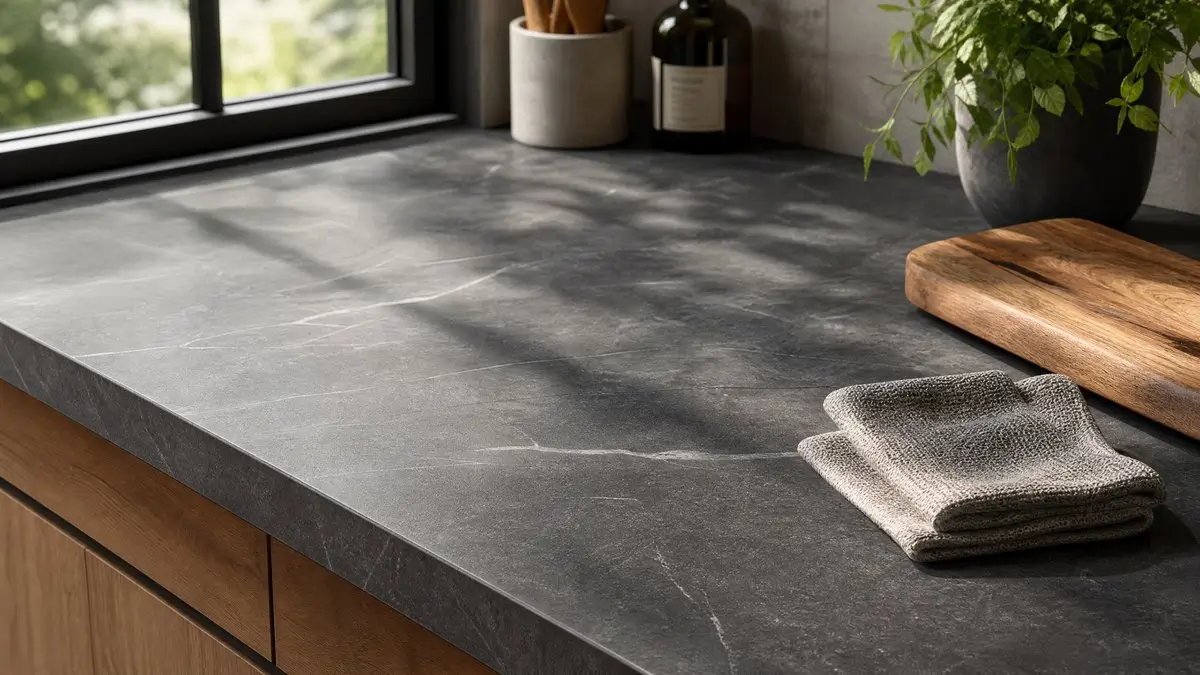
If you are wondering how to clean soapstone countertops, keep the routine simple. It is non-porous and does not need a sealer. Because it is softer than many other countertop stones, loose grit and rough cleaning tools can leave surface marks. A soft cloth, mild dish soap, a clean-water rinse, and thorough drying are usually all you need.
For day-to-day care, start with the least aggressive method. This is the core idea behind how to clean soapstone countertops without leaving a residue behind. Soapstone specialist guidance generally recommends soap and water for normal cleaning, while mineral oil is optional and mainly changes the stone’s color and the look of its patina. Vermont Soapstone’s care guidance is a useful reference for those material-specific basics.
What you will need
Gather a few simple supplies before you begin. Skip abrasive pads, steel wool, and unknown specialty chemicals unless your countertop fabricator specifically recommends them.
- Mild liquid dish soap: Use a small amount in warm water.
- Two microfiber cloths: One for cleaning and one for drying.
- Warm water: Use clean water for both washing and rinsing.
- Optional food-grade mineral oil: Use it only if you want a darker, more even-looking patina.
How to clean soapstone countertops
This is how to clean soapstone countertops without overcomplicating the process. The routine is gentle, quick, and suitable for regular kitchen use. Work across the whole counter so the finish dries evenly.
Step 1: Clear away loose grit
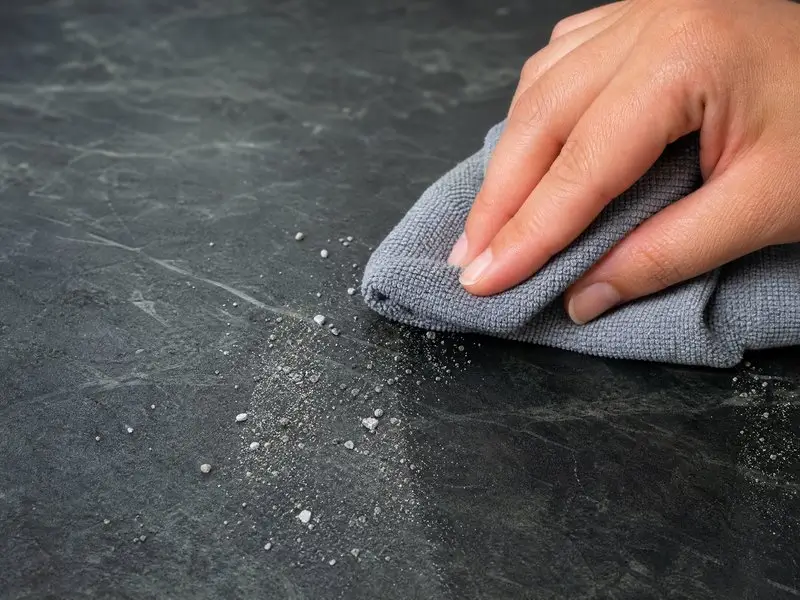
Before adding water, use a dry microfiber cloth to lift crumbs, grit, and other particles from the surface. This reduces the chance of rubbing something abrasive across the stone while you clean.
Step 2: Wipe with mild soap and warm water
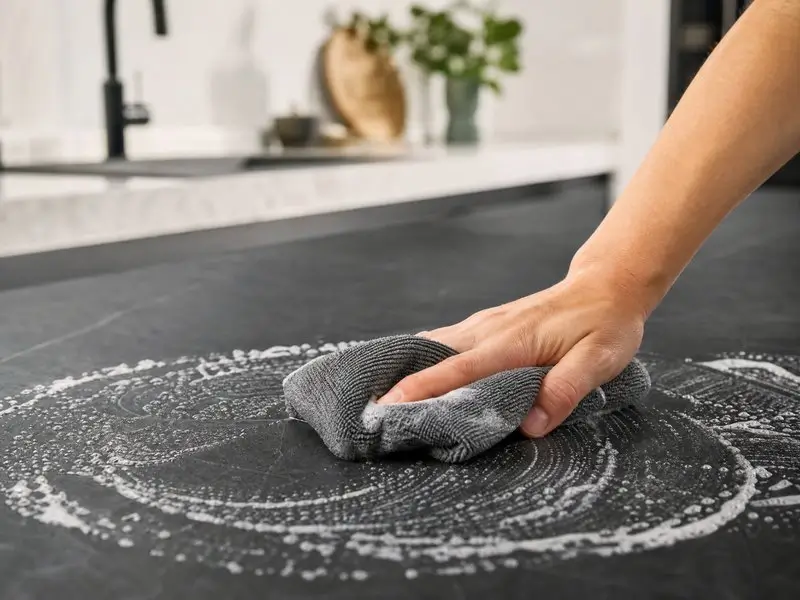
Mix a small amount of mild dish soap with warm water. Dampen, rather than soak, a microfiber cloth and wipe the counter in overlapping passes. Pay extra attention to areas around the sink and stove where food residue and cooking oils collect.
Step 3: Rinse with clean water and dry
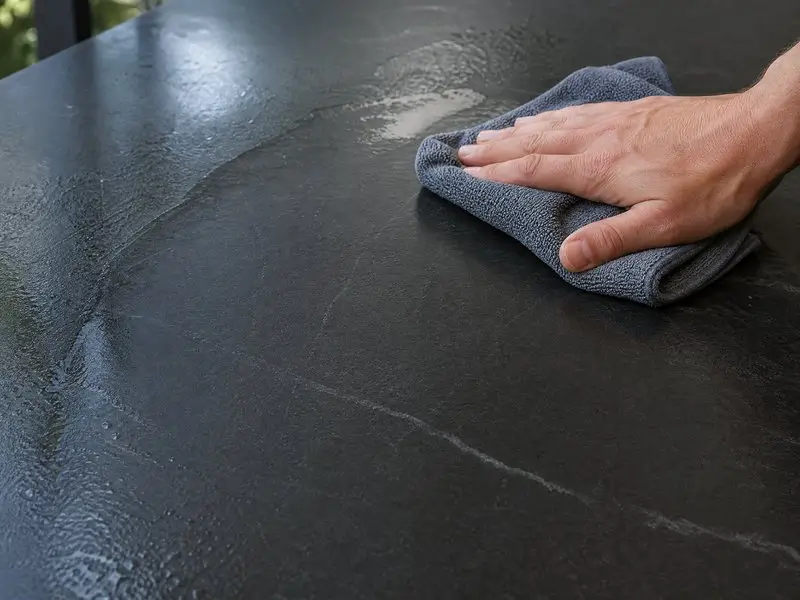
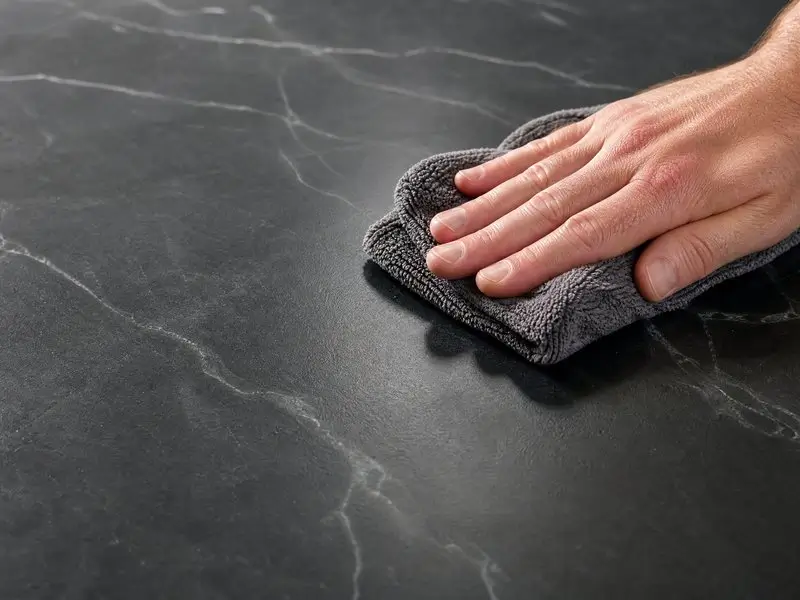
Rinse the cloth thoroughly, then wipe the counter again with clean water. Finish with a dry microfiber cloth. This second pass is an important part of how to clean soapstone countertops because it removes leftover soap and gives you a clearer view of the stone’s natural finish.
Step 4: Oil only if you want a darker patina
Oiling is optional. If you prefer the darker look, apply a small amount of food-grade mineral oil with a clean cloth, spread it evenly, and wipe away excess. Treat the whole visible area rather than one small spot for a more even appearance. Follow your fabricator’s guidance for the finish on your specific countertop.
Common soapstone care questions
Soapstone can develop light surface marks and uneven color as it is used. Start with the gentle fixes below, and contact the fabricator or installer before using strong chemicals or abrasives on a deep scratch or an unfamiliar stain.
| What you see | Start here | Avoid |
|---|---|---|
| Light surface mark | Clean, dry, then consider a light, even coat of mineral oil if you use an oiled finish. | Jumping straight to sanding without fabricator guidance. |
| Greasy or dull area | Wash with mild soap, rinse with clean water, and dry with a microfiber cloth. | Layering extra oil over residue. |
| Deep scratch or stubborn mark | Ask the fabricator or installer how they recommend treating your stone and finish. | Testing bleach, acids, or aggressive abrasives on a visible area. |
Recommended maintenance schedule
Keep the routine simple and adjust it to how heavily you use your kitchen. Once you know how to clean soapstone countertops, regular care takes only a few minutes.
- Daily: Clear crumbs and wipe up spills.
- Weekly: Wash with mild soap, rinse with clean water, and dry.
- As desired: Apply mineral oil if you want to maintain a darker patina.
For more practical home-care articles, visit our Clean category.