
How to Remove a Stripped Screw: 5 Practical Methods
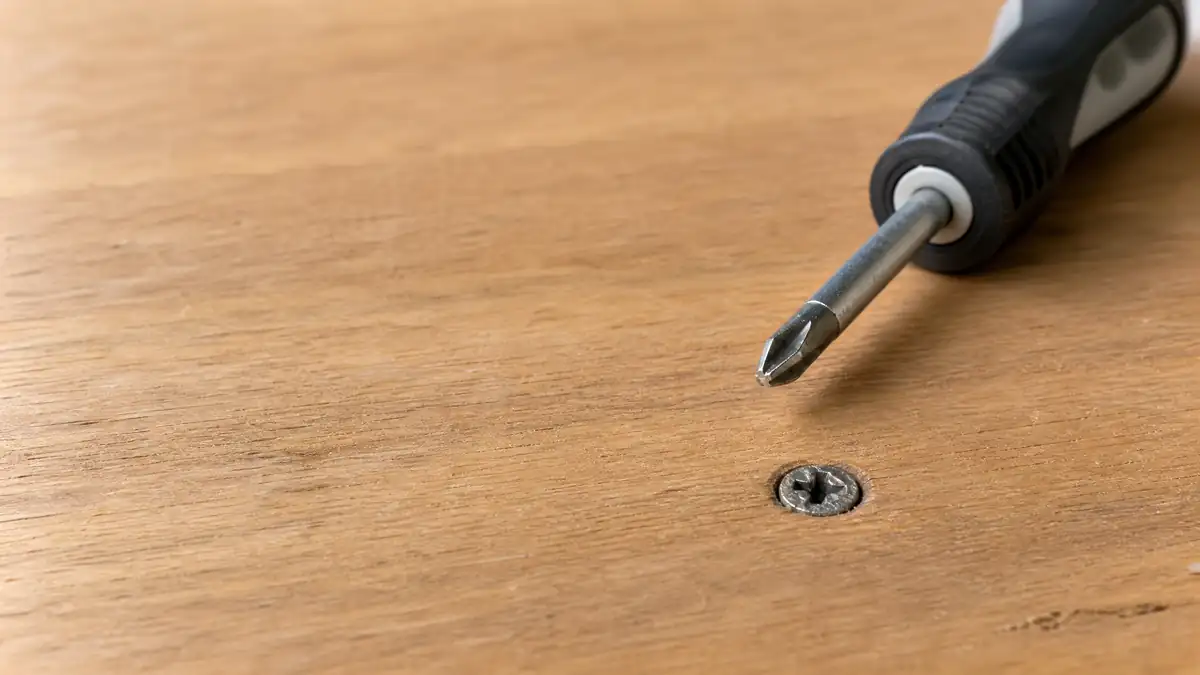
A stripped screw is frustrating, but forcing the same driver usually makes the problem worse. The best way to remove a stripped screw is to start with the least aggressive method, then move to a stronger tool only if the screw head gives you no grip. This guide helps you choose the right next step without damaging the surrounding surface.
This guide shows how to remove a stripped screw without jumping straight to drilling. First, look closely at the screw. If the cross or star shape is still visible, it is partly stripped and you may be able to recover it with a better-fitting bit or a simple grip aid. If the recess is smooth, the screw is fully rounded and an extractor is usually the cleaner choice.
Choose the right method before you start
Knowing how to remove a stripped screw is mostly about matching the method to the condition of the head. Start with the table below. It prevents you from wasting time on a trick that cannot grip the screw you have.
| What the screw looks like | Best first method | Do not do this |
|---|---|---|
| Drive is worn, but its shape is still visible | Use a fresh correctly sized bit, then try a wide rubber band for extra grip. | Keep spinning a slipping drill driver at high speed. |
| Head is fully rounded or recessed | Use a screw extractor with a centered pilot hole. | Use an impact driver or rush the drilling step. |
What you will need
You do not need every tool on this list. Begin with the first few items, then add the extractor tools only if the screw has no usable drive left.
- Fresh driver bits or screwdrivers: Match the original screw drive as closely as possible.
- A wide rubber band: Use it only to help a partly damaged screw gain grip.
- Screw extractor set and standard drill: For a rounded or recessed screw.
- Center punch, small drill bit, and safety glasses: For a controlled extractor pilot hole.
Method 1: Use the right bit and straight pressure
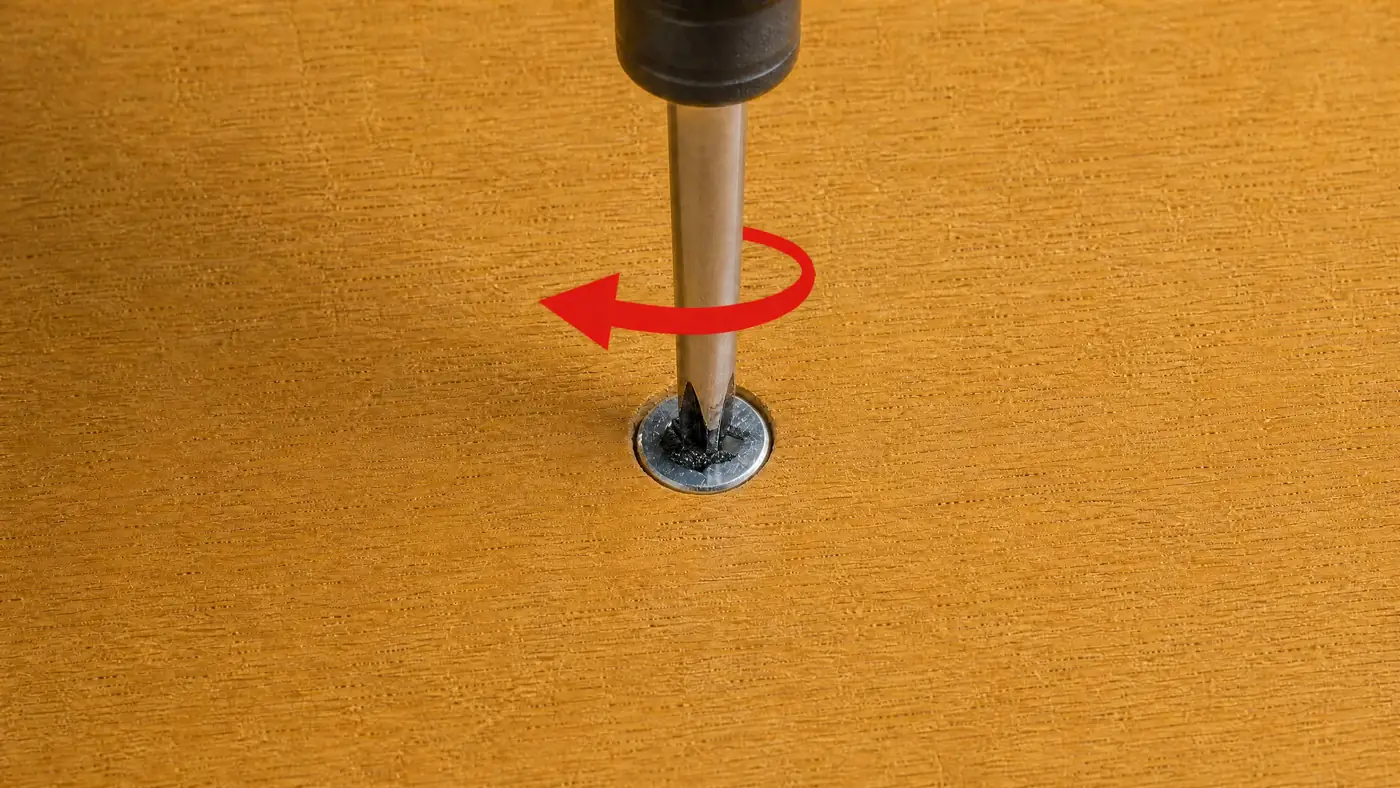
Before trying any special trick, fit a fresh driver bit that fills the screw head as completely as possible. Keep the driver straight, press firmly into the recess, and turn slowly counterclockwise. A slightly larger driver can sometimes make better contact on a lightly damaged screw, but stop immediately if it slips or starts to chew away more metal. A correct fit and controlled torque are the first things to try when learning how to remove a stripped screw.[1]
If a power driver has already slipped once, switch to a manual screwdriver for this first attempt. You get more feel and can stop before the damage gets worse.
Method 2: How to remove a stripped screw with a rubber band
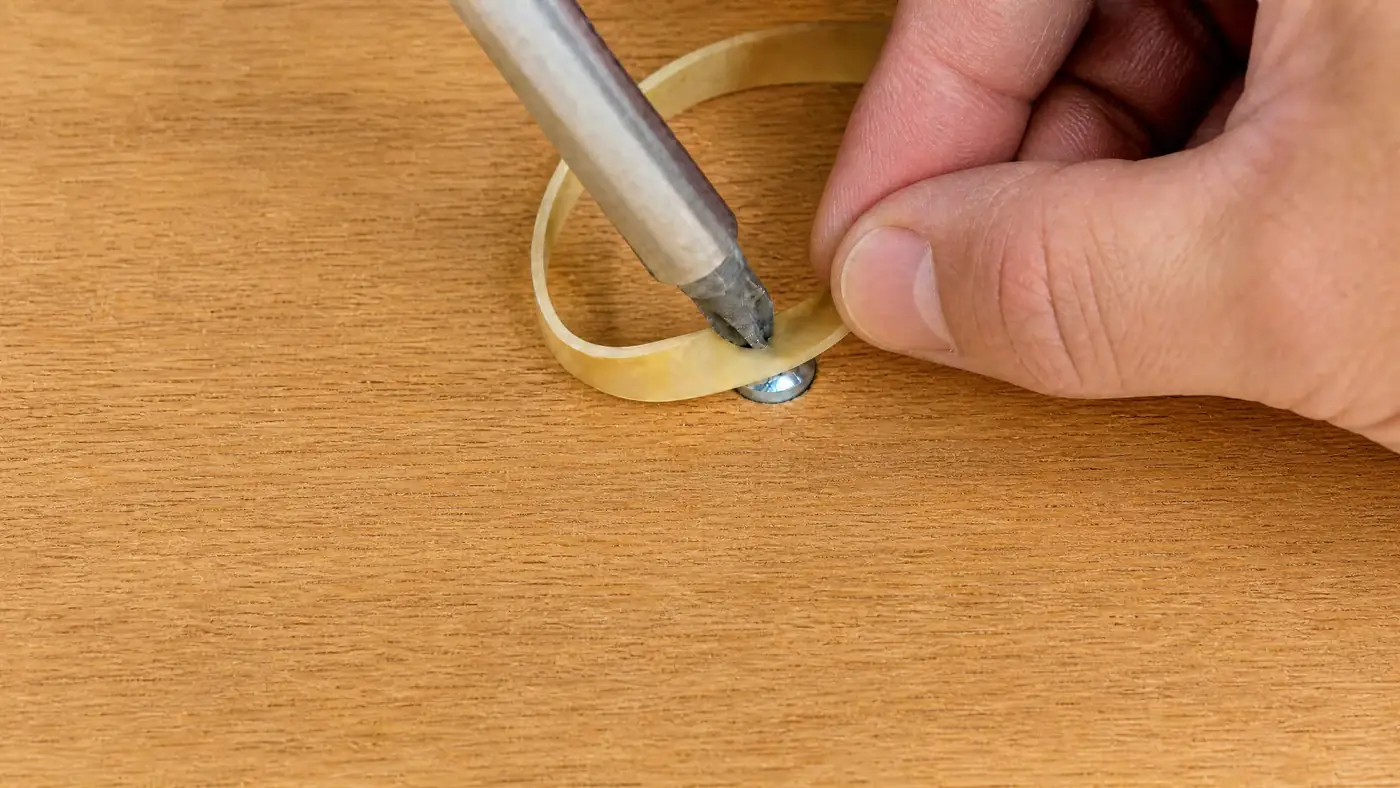
This method works only when the drive is still partly intact. Place a wide rubber band flat over the screw head. Push the driver straight through the rubber band into the recess, keep firm downward pressure, and turn slowly counterclockwise. The rubber fills small gaps between the driver and the damaged drive, which can provide just enough friction to move the screw.[1]
Method 3: Use a grip compound on a partly damaged screw
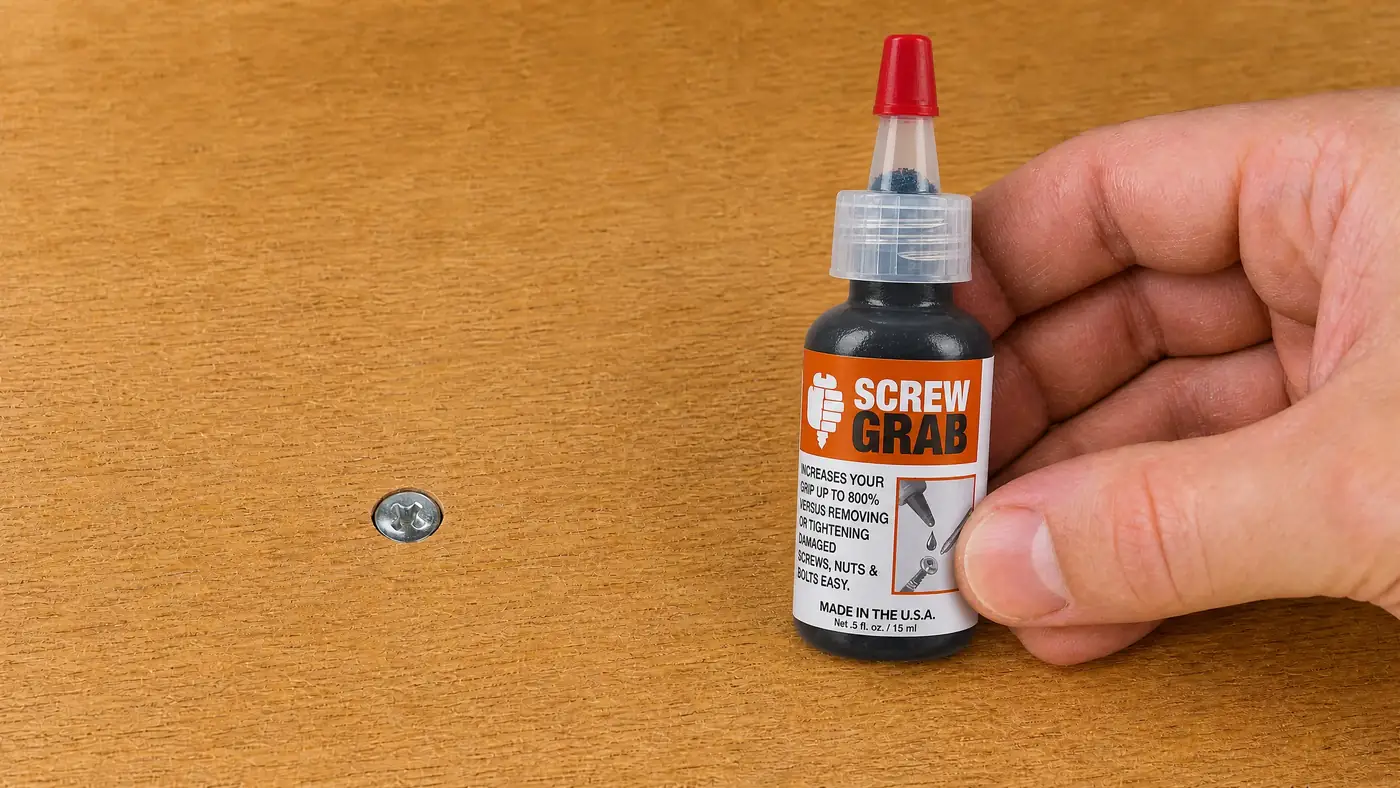
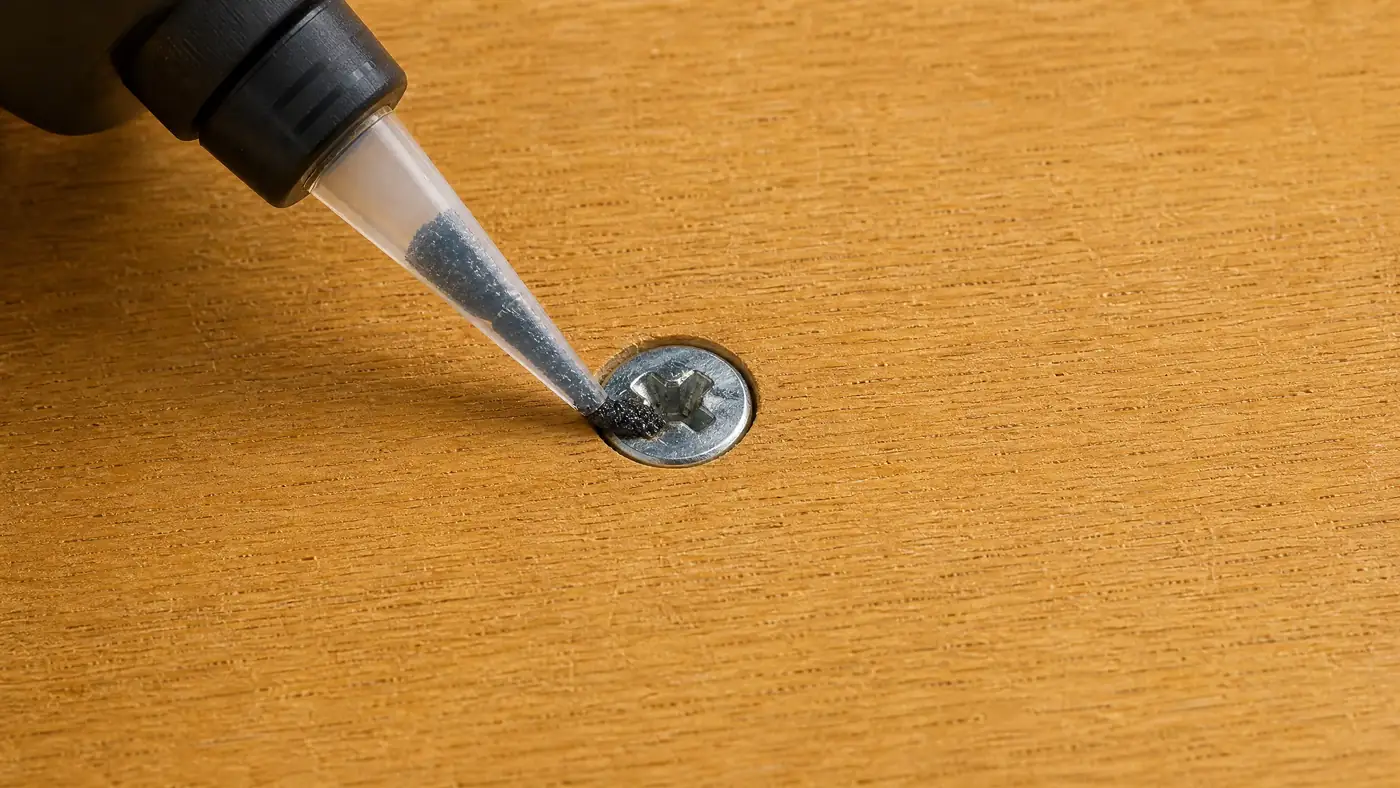
A driver-grip compound can add friction when the recess is worn but still has enough shape to accept the bit. Apply only a small amount to the damaged drive, seat the correct screwdriver straight down, and turn slowly by hand. The compound is a grip aid, not a substitute for a correctly sized driver.
Method 4: How to remove a stripped screw with an extractor
A screw extractor is the better option when the drive is too damaged for a normal bit and the screw cannot be grabbed from the outside. Most extractors use reverse threads that bite into a prepared pilot hole as you turn counterclockwise. Choose an extractor size that matches the screw, wear safety glasses, and use a standard drill rather than an impact driver.[2]
- Use a center punch to make a small mark in the middle of the screw head.
- With the drill held straight, make a shallow pilot hole using a bit smaller than the screw diameter.
- Set the drill to reverse and run the extractor slowly into the pilot hole until it bites.
- Keep turning slowly in reverse. If the screw begins to move, do not speed up.
- Once loose, finish removing the screw by hand and replace it with a new one.
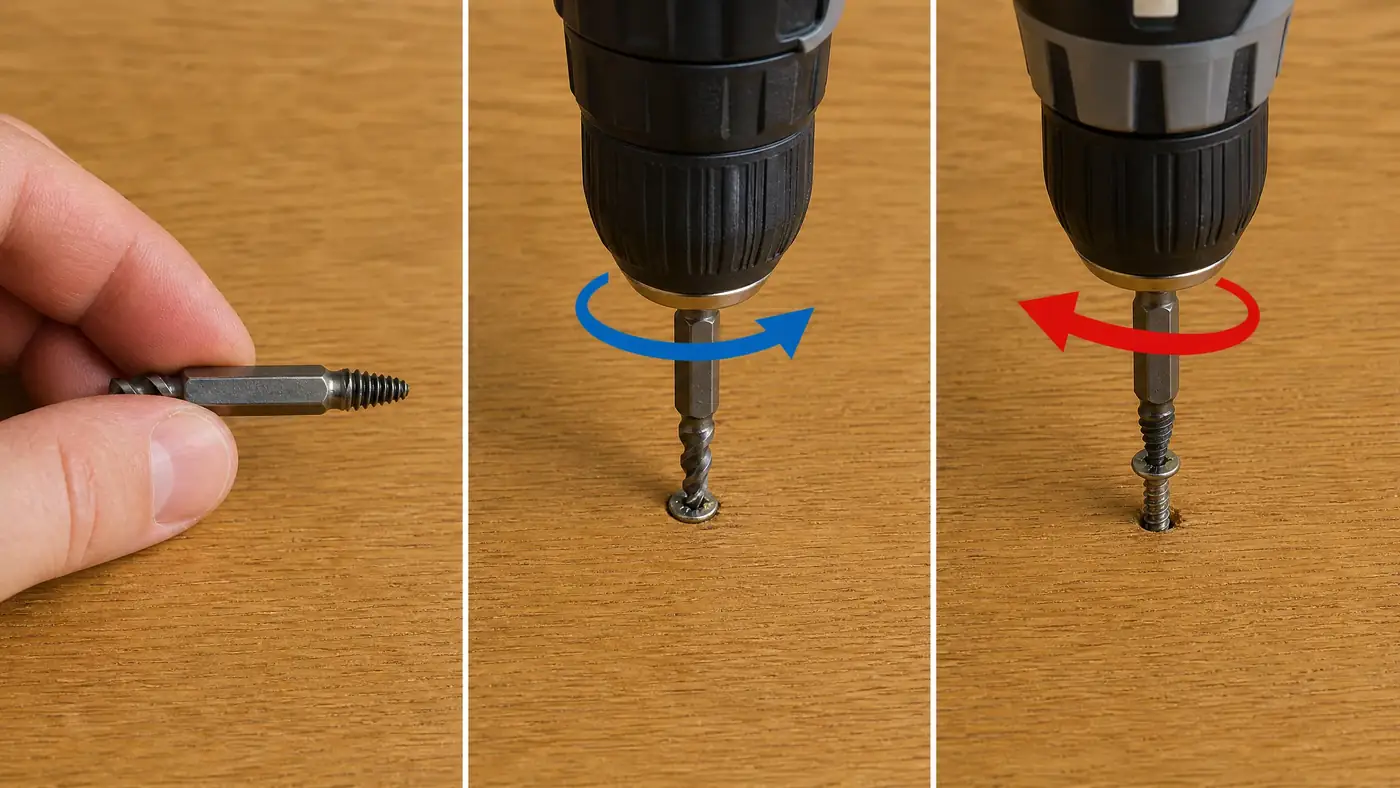
Go slowly. When you need to know how to remove a stripped screw with an extractor, the goal is to back the screw out, not drill it away. If the extractor does not bite, reassess the pilot hole and extractor size. Continuing with excess force can snap the extractor, which is much harder to remove than the original screw.[2]
When to stop and ask for help
Do not turn every stuck screw into a major repair. Cutting a new slot in the head or drilling the screw out can work, but both methods can damage paint, wood veneer, cabinets, electronics, and threads. They are last-resort options for a situation where the surrounding material can tolerate the repair.
Call a repair professional when the screw is near electrical wiring, inside an appliance, in a car component, or attached to a valuable finished surface. That is not giving up. It is choosing the least expensive outcome.
Method 5: Cut a slot as a last resort
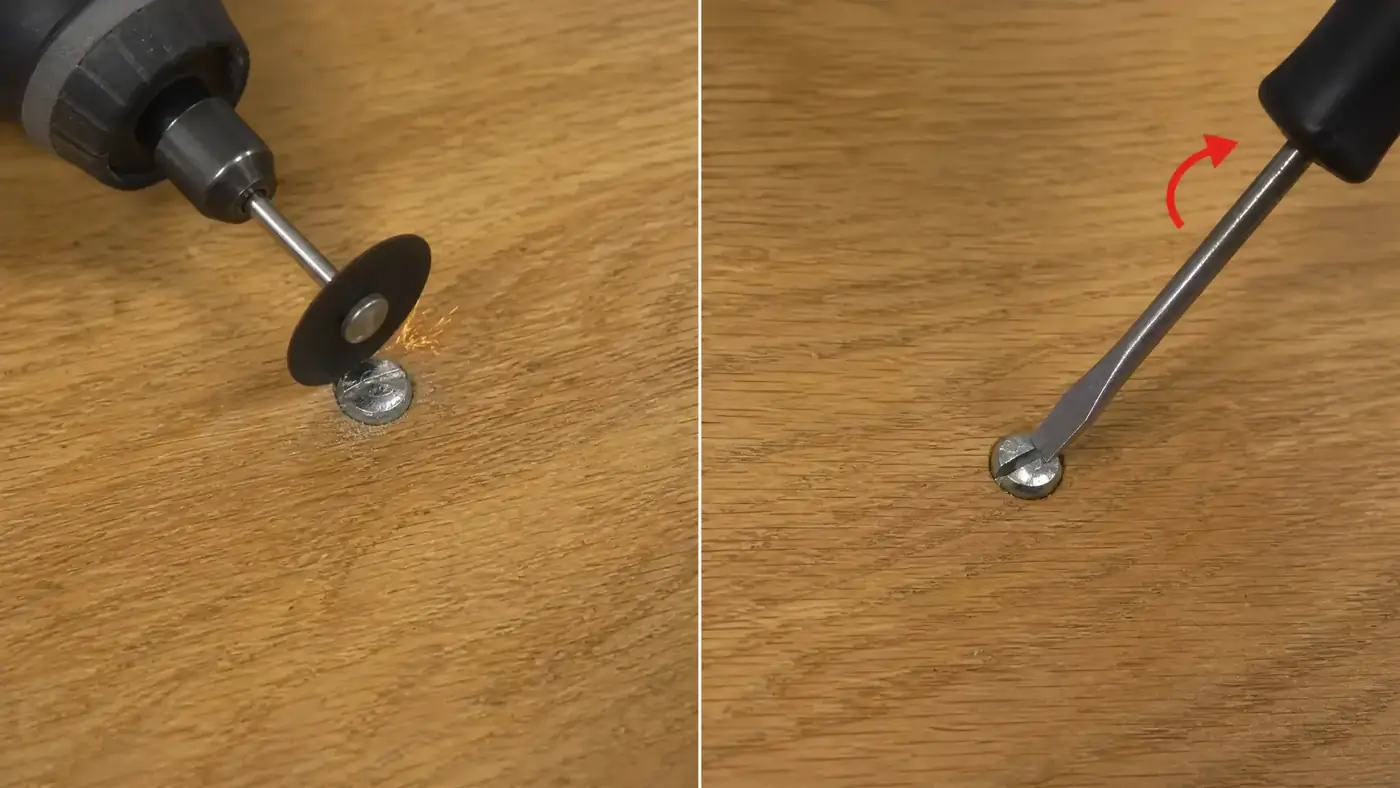
If the head is too damaged for a normal bit, a rotary tool with a thin cutoff wheel can cut one straight slot across the screw. Wear eye protection, protect the surrounding surface, keep the wheel controlled, and make the cut only deep enough for a flat-head screwdriver. Then switch off the rotary tool, seat a properly sized flat-head screwdriver in the new slot, and turn slowly counterclockwise.
How to avoid stripping screws next time
Once you know how to remove a stripped screw, prevention becomes much easier. Use a driver bit that fully engages the screw, keep it straight, and use controlled pressure. Start wood screws with a pilot hole when appropriate, and stop the moment you feel the bit slipping.
- Use a new, correctly sized bit instead of a worn one.
- Keep the driver in line with the screw rather than leaning it sideways.
- Use a manual screwdriver for delicate final turns.
- Replace the damaged screw instead of putting it back into service.
Quick answer
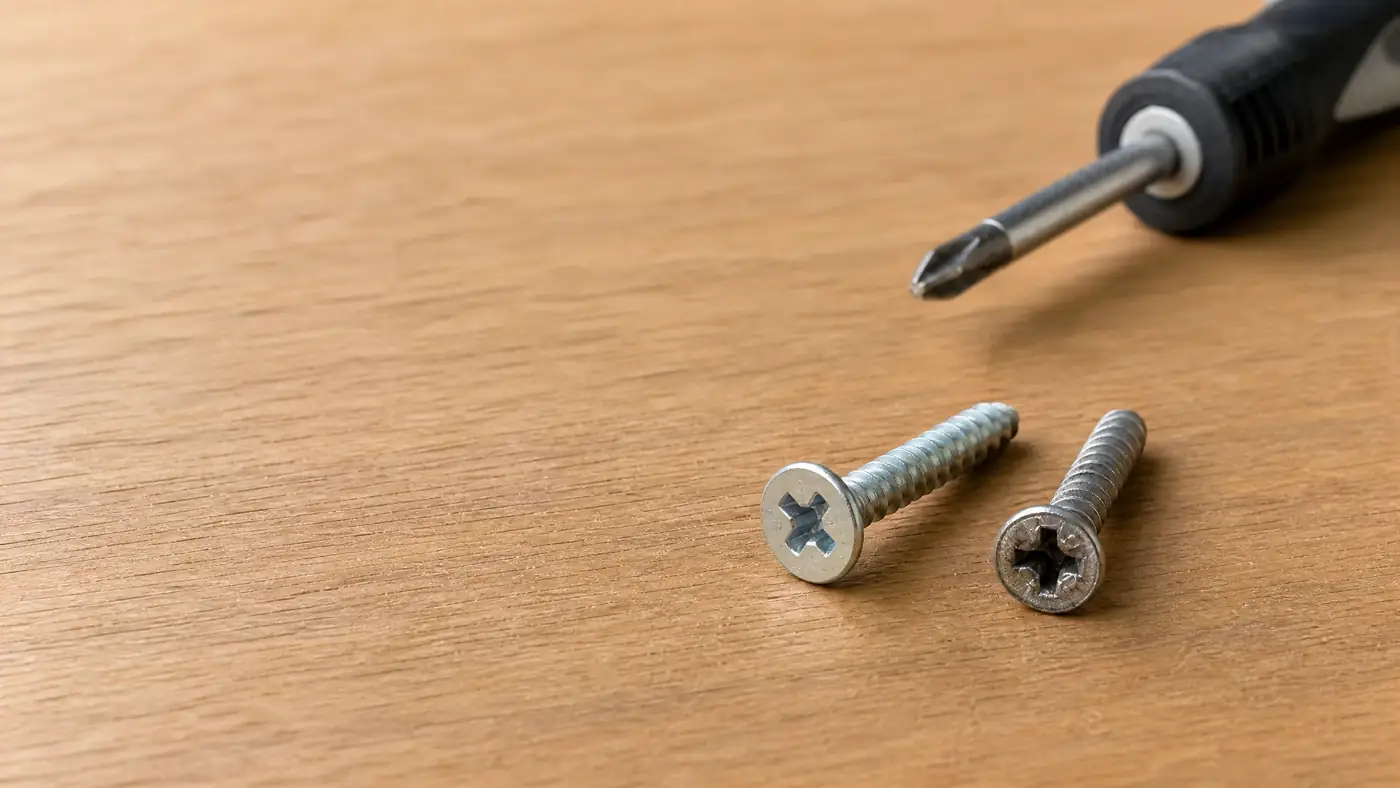
For a partly stripped screw, try a fresh correctly sized bit with firm straight pressure, then a wide rubber band if needed. For a fully rounded or recessed screw, use a screw extractor slowly and in reverse. That simple escalation is the safest way to remove a stripped screw without creating a bigger repair.